Prevent Basement Leaks with Weeping Tiles in London, Ontario: A Homeowner’s Checklist
Basement water problems in London, Ontario rarely show up on a sunny day. They arrive after two nights of steady rain in April, or during a January thaw when snowpack melts fast and the ground is still frozen. If your home sits on one of the city’s clay pockets, water has nowhere to go but sideways. Add older foundations with tired damp proofing, and you have a recipe for damp walls, musty smells, and the occasional shop vac sprint at 2 a.m. The right drainage strategy changes that dynamic. In our region, that often means a functioning weeping tile system, sometimes paired with French drains and smart backyard grading.
I have walked enough wet basements in Old North, Byron, and the south end to know there is no single fix for every property. What follows is a practical, London specific guide to pinpoint the cause, decide whether you need repair or replacement, and work through the details with a contractor who knows local soils and weather.
Why basements in London get wet
The geology under much of London is stubborn. Many neighborhoods sit on compacted clay or silt lenses over glacial till. Clay holds water, so it releases moisture slowly after storms and spring melt. Combine that with seasonal freeze thaw cycles and you get hydrostatic pressure pushing on foundation walls long after the last rainfall. Homes close to the North and South Branches of the Thames often see a high water table during wet springs, which compounds the issue.
House age matters as well. Many homes built before the 1970s used clay or concrete weeping tiles. Those sections can crack, shift, or fill with fines and roots over time. Even houses from the 1990s are not immune if the original installation skimped on cleanouts, filter fabric, or stone bedding. Downspout tie ins that used to dump roof water into the weeping tile system also contribute, which is why most Ontario municipalities now discourage or prohibit storm connections to sanitary lines. The practical point for a homeowner is that your foundation drainage needs to move a lot of water fast, and it needs to keep working in cold weather.
What a weeping tile system actually does
A weeping tile is not a tile, it is a perforated pipe that collects groundwater around the foundation and routes it away before it presses through the wall. There are two standard configurations.
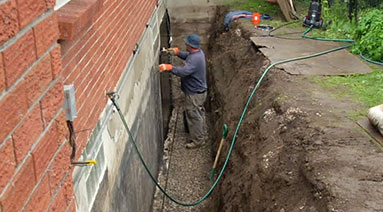
Exterior weeping tile runs at the base of the footing, outside the wall. It sits on a bed of washed stone, usually 3/4 inch clear, wrapped in a filter fabric to hold back fines. The pipe should be sloped gently to a sump pit or to daylight if the lot allows. Exterior systems handle groundwater before it reaches the wall, and they pair well with modern membranes on the foundation.
Interior weeping tile sits inside the basement, next to the footing, under the slab edge. Installers cut a trench in the floor, lay perforated pipe in stone, and tie it to a sump pit. This does not keep water from reaching the wall, but it relieves pressure and keeps the floor drier. Interior systems work well on tight infill lots where exterior excavation is tough, or when landscaping and decks make outside work expensive.
Folks sometimes use the term French drain loosely. A French drain is a perforated pipe in a gravel trench that intercepts shallow groundwater or surface runoff. In London, contractors build French drains along the backyard’s low side, between homes where swales are shallow, or parallel to a driveway that sheds water toward the house. You will see searches for french drains London Ontario because they solve soggy lawn problems, but they are not a substitute for a proper foundation drain. Used together, they can help a property as a whole shed water so the weeping tile does not carry the entire load.
How to recognize a failing system
You do not need a moisture meter to spot the early signs. Efflorescence, that white powdery film on concrete, signals moisture wicking through the wall. Paint that blisters in a line a foot or two above the slab hints at a seasonal water table. Rust on the bottom of steel columns near the slab suggests chronic dampness. If you see actual drips at the cove joint where the wall meets the floor, pressure is finding the easiest path inside. A sump that runs constantly for days after a storm is doing its job, but if it short cycles every few minutes, the pit may be undersized or the discharge line could be restricted.
Older homes that still have ceramic or clay weeping tiles often show uneven performance. One wall stays dry while another weeps during heavy weather. That mismatch, paired with calcified deposits in the sump discharge, points to clogged segments. Trees near the foundation add root intrusion to the list.
The homeowner’s checklist before you call anyone
- Walk the exterior after a hard rain and look for pooling near the foundation, downspouts dumping at the wall, or a negative slope that sends water toward the house.
- Open the sump pit lid safely and check water level, pump operation, and whether there is a check valve on the discharge line.
- Examine the basement walls for horizontal tide lines, fresh efflorescence, or damp corners that follow a pattern.
- Note recent changes, such as a new patio, hot tub pad, or fence post line that may have blocked a drainage swale.
- Gather basic facts for a contractor, including house age, foundation type, and whether the power ever goes out for hours in your area.
These five steps give you a factual baseline and often reveal a simple fix, like extending a downspout another 10 feet into the yard. If the issues point to the foundation system, you can speak with drainage contractors in London Ontario using the right vocabulary and a clear set of observations.
Where French drains fit on a London lot
Backyard drainage in London Ontario often suffers from the same clay that troubles basements. Lawns hold puddles long after rain, and side yards between houses can act like a trough. When regrading is limited by property lines or a mature tree, a French drain becomes a practical tool. Picture a shallow trench two to three feet deep, lined with geotextile, filled with clear stone and a perforated pipe that directs water toward a safe outlet. A proper outlet matters. On some properties that means a pop up emitter near the street side of the lawn. On sloped lots it can daylight along the back fence. In a few cases it ties into a storm lead if one exists and if the city allows the connection.
You will still want to treat the source. Kick out downspouts with solid pipe so they do not recharge the trench. Use a catch basin under a downspout where it meets a hard surface, like a driveway or patio, to keep water out of joints that often leak back toward the foundation. Consider a dry well if you have space and sandy subsoil. If you are on heavy clay and the well will just become a bathtub, stick with surface conveyance and shallow drains that move water laterally to a lower point on the lot.
When people search for french drains London Ontario, they usually want a yard that can be used the day after a storm, not a foundation fix. Set that expectation early. A French drain that keeps lawn furniture out of puddles and a weeping tile that keeps the basement floor dry solve different problems. Both matter.
Interior versus exterior: how to decide
If exterior access is clear, the footing depth is reasonable, and https://devinkpbm671.timeforchangecounselling.com/french-drains-for-new-builds-in-london-ontario-what-builders-need-to-know you plan to improve insulation or finish the basement long term, replacing or installing exterior weeping tiles is the gold standard. It lets you add a modern dimpled membrane, repair any cracks properly, and redirect water before it ever meets the wall. The tradeoff is disruption. Decks, walkways, porches, and landscaping along the walls need to be removed and later rebuilt.
Interior systems are less invasive up front. Experienced crews can cut and trench around a typical basement in a day or two, set the pipe, and pour back the floor edge with minimal exterior disturbance. You accept that the wall still sees exterior moisture, but you gain reliable drainage at the slab level. For homes on narrow lots in Old East Village or with shared driveways, that compromise often makes sense.
There are hybrids too. A partial exterior repair on the worst wall, paired with interior drainage around the rest of the perimeter. Or an exterior system that terminates in a sump with a high reliability pump so you are not depending on gravity alone. In flood prone pockets near the river branches, redundancy is worth the cost.
The seasonal maintenance routine that actually helps
- Test the sump pump twice a year by pouring water into the pit until the float lifts, then confirm the discharge is strong and the check valve holds.
- Extend downspouts before freeze season, using solid pipe or hinged extensions that get water at least 10 feet from the wall.
- Clear foundation plantings that trap moisture against the house, and trim roots away from window wells and drains.
- Inspect the discharge line for kinks or low spots that hold ice, and add an insulated section or a secondary freeze bypass if needed.
- After a major storm, walk the basement and mark any damp spots on the wall with date and height, so you can track patterns over time.
Five simple tasks, 60 minutes in total, and you will often eliminate half the nuisance moisture before you call anyone.
Practical installation details that matter more than brochures
Depth and slope decide whether a system works. The weeping tile needs to sit at or just below the bottom of the footing, not halfway up the wall. A typical slope target is about 1 percent, roughly 1/8 inch per foot. In real basements with footings that step down, this translates to consistent attention from the crew, not a casual bubble on a level. Bed the pipe in 6 to 8 inches of clean, angular stone and cover it fully, then wrap with a non woven geotextile. The fabric stops fines from the backfill and local clays from clogging the voids. On older homes with rubble or fieldstone walls, that filter layer is the difference between a system that breathes and a system that silts up in a year.
Cleanouts are cheap insurance. Ask for at least two vertical cleanouts that come to a flush cap under a mechanical room or a storage corner. A shop vac and a garden hose can fix small clogs through those ports without tearing up floors. If your yard allows a gravity outlet to daylight, keep the last few feet of pipe solid, not perforated, so you are not recharging the trench near the exit.
The sump is a system on its own. A 1/3 horsepower pump suits many homes, but houses with long discharge runs, higher heads, or multiple drain connections often benefit from a 1/2 horsepower unit. A tight fitting lid with gaskets reduces humidity and radon entry. A check valve placed within a few feet of the pump cuts short cycling. A battery backup adds margin during the summer thunderstorms that trip breakers or knock out power for an hour. Consider a second discharge line to the exterior for the backup pump so a failure in one line does not silence both.
Discharge location is both performance and compliance. The City of London publishes guidance on where to route sump water and downspouts. Rules change, and exceptions exist, but most Ontario municipalities do not want storm water in the sanitary system. In practice, you will route to the lawn, a swale, or a storm lead if available and approved. Direct the outlet so it does not create ice on sidewalks or freeze a neighbor’s driveway.
Cost ranges and what drives them in London
Costs swing with access, depth, and finish work. As of recent seasons in southwestern Ontario, a full perimeter interior weeping tile with sump typically lands in the mid four figures to low five figures for an average home. That is a broad way to say you might see quotes from roughly 6,000 to 15,000 dollars depending on linear footage, number of corners and obstacles, and concrete thickness. Add a battery backup pump and some additional cleanouts, and the upper end climbs.
Exterior replacement runs higher because of excavation and restoration. Expect ranges that start in the low five figures and can climb to 20,000 dollars or more if you have deep footings, a walkout wall, or complex hardscape to remove and rebuild. Stone, fabric, pipe quality, and membrane choice are small line items compared to machinery time and labor. Ask for a scope that spells out linear feet, depth, stone type, pipe perforation pattern, fabric specification, membrane brand, and the exact discharge routing. With that on paper, quotes become apples to apples.
French drains for yard issues come in lower on a per foot basis than foundation work, but the total still reflects length and access. A simple 30 foot side yard drain that connects to a pop up emitter might come in under a few thousand dollars. Long trenches, deep cuts to find a fall, or tie ins to storm leads move the number up. When you see ads for cheap french drains London Ontario, press for details. The right system uses clean stone and proper fabric. Shortcuts get cheaper only on day one.
Choosing drainage contractors in London Ontario
Treat this like hiring a structural trade, not a mowing service. Ask for proof of liability insurance and WSIB clearance. A legitimate firm will provide both without pushback. Check that they self perform the core work. Subbing out the entire job can work, but clarity suffers and warranty lines blur when three companies handle excavation, drainage, and restoration.
Focus on diagnosis, not sales. A good contractor will spend time outside looking at grading, downspouts, window wells, and sidewalks. They will ask about your power reliability, whether you plan to finish the basement, and if you can tolerate the disruption of exterior work. Be wary of anyone who recommends interior drainage for a wall that is bowing, without a plan for structural repair. The water problem is not the only problem in that case.
References help, but local familiarity helps more. Someone who has worked on homes in your neighborhood knows the footing depth and soil quirks you are likely to face. Ask to see a current job if possible. Clean edges on saw cuts, stone that looks like it came from a quarry rather than a field, and filter fabric correctly installed say more than a printed brochure.
Warranties vary. A lifetime warranty that excludes clogging and hydrostatic pressure is not much use. A practical warranty covers materials and workmanship for a defined period and includes at least one service visit to clear silt from cleanouts. For French drains, look for a warranty that covers settlement along the trench and performance after normal rains, not after a once in a decade flood.
Common pitfalls I see again and again
The shallow trench problem tops the list. I have seen weeping tiles set mid wall because the crew hit hardpan and gave up. The system will move some water for a season, then it stops performing when fines settle. Another is the wrong stone. Pea gravel looks tidy, but it is too smooth and tight. Use angular clear stone so the voids remain open.
On the interior, skip the thin saw cut. A trench cut only as wide as a shovel forces the pipe to sit too high and practically guarantees crooked slope. You want a trench wide enough to place and compact stone properly, then pour back a slab edge that will not crack along the line.
Discharges freeze here. The fix is simple. Slope the exterior line so water drains completely when the pump stops, insulate the first few feet outside, and add a bypass tee with a flap that opens if the main line ices up. A pump running against ice burns out fast.
How backyard grading and surface water set the stage
Even a perfect weeping tile will struggle if the yard sends water back to the house. A day with a shovel and a string line solves many chronic leaks. You want at least a gentle fall away from the foundation the first six feet, around an inch per foot if the soils allow. Use topsoil with some clay content to hold shape, not sand that washes out. Under decks, pull back the boards if you must and build a pitch. Where two houses create a side yard bowl, build a defined swale that both neighbors can maintain. If cooperation is not in the cards, install a French drain on your side with a clear outlet and document the work. It is easier to defend drainage decisions when they are visible and sensible.
Window wells deserve attention. They should sit on clean stone, have a drain to the weeping tile or a dry well, and rise at least six inches above the finished grade. I have seen wells level with mulch beds, then owners wonder why storms drop water right into the basement through the window seam.
Winter and shoulder season realities
London winters are not the coldest in Canada, but freeze thaw plays havoc with drainage. Water that moves at noon can freeze by dinner. If your sump line leaves the house through a north wall, add insulation and a short section of heat trace back to a safe outlet. Set downspout extensions that you can kick up for mowing, but keep them down during warm winter rains. If your basement is finished, a leak in February costs more than a puddle in August.
Snow management counts too. Shovel windrows away from the foundation line after plowing or snowblowing, especially along driveways that tuck against a side wall. Those piles melt and seep into cracks you did not know you had. Use calcium chloride sparingly near concrete that drains toward the house. Salt brine increases thaw cycles and moisture load at the wall.
Restoration that does not undo the work
After exterior excavation, the backfill wants to settle. Allow for that in the schedule and in the budget. Compact in lifts, overfill slightly, and expect to top up soil after the first heavy rains. Bring in clean topsoil for the last six inches to support grass and shed water. Keep mulch and river rock decorations a safe distance from the wall. Both trap moisture. If you rebuild a walkway, pitch it away from the house. Even a quarter inch per foot matters when the next storm arrives.
Inside, cure time matters. New concrete around an interior trench needs a few days before heavy shelving or washers return to their spots. Humidity will rise after a pour. Run a dehumidifier and hold off on re installing baseboards for a week. If you intend to finish walls, keep insulation off the concrete with proper framing and a continuous vapor control strategy. A great drain does not fix a bad wall assembly.
What to ask when someone says your weeping tiles are fine
You are entitled to specifics. Ask how they verified performance. Dye tests, a camera run through a cleanout, or at least a water test at the sump tell a story. Demand clarity on the outlet. If the pipe relies on a gravity line to daylight, where is it and what is the fall. If it runs to a sump, what is the pump’s head rating for your discharge height. Vague answers here are a red flag. Finally, ask about maintenance. A truly fine system will come with a simple plan that you can carry out each season, not a shrug.
Bringing it together on a London lot
Look at your house and yard as a watershed. Roofs collect, walls resist, soils store, and drains move. Weeping tiles in London Ontario are an essential part of that picture, but they perform best when the rest of the system helps them. Sound grading, downspouts that carry water far from the wall, and French drains where lawns stay wet give the foundation a fair fight. When work is needed, experienced drainage contractors in London Ontario will tailor the fix to your lot, your plans for the basement, and the realities of local weather.
If you keep the basics straight and the details tight, the next heavy spring rain becomes a soundtrack, not a crisis. The sump hums, the discharge splashes where it should, and the basement smells like a basement, not a shoreline. That is the goal, and in this city, it is a realistic one.
Ashworth Drainage — Business Info (NAP)
Name: Ashworth DrainageAddress: 514 Hale St, London, ON N5W 1G8
Phone: (519) 660-9375
Website: https://www.ashworthdrainage.ca/
Email: [email protected]
Hours:
Monday: 9:00 AM – 5:00 PM
Tuesday: 9:00 AM – 5:00 PM
Wednesday: 9:00 AM – 5:00 PM
Thursday: 9:00 AM – 5:00 PM
Friday: 9:00 AM – 5:00 PM
Saturday: Closed
Sunday: Closed
Open-location code (Plus Code): XRR3+HV London, Ontario
Map/listing URL: https://maps.app.goo.gl/9kaoXAxRtJRP1ThS9
Embed iframe:
Socials (canonical https URLs):
Facebook: https://www.facebook.com/ashworthdrainage/
X: https://twitter.com/ashworthrules
Instagram: https://www.instagram.com/ashworthdrainage/
https://www.ashworthdrainage.ca/
Ashworth Drainage provides basement waterproofing and foundation repair services in London, Ontario and surrounding areas in Southwestern Ontario.
The company helps homeowners address wet basements, water intrusion, and drainage issues with solutions that fit the property’s conditions.
Service requests can include foundation repair, waterproofing options, sump pump and drainage-related work, and related assessments.
Ashworth Drainage is based at 514 Hale St, London, ON N5W 1G8.
To reach the team, call (519) 660-9375 or email [email protected].
Business hours are Monday to Friday 9:00 AM–5:00 PM, with the office closed Saturday and Sunday.
For directions and listing details, use the map listing: https://maps.app.goo.gl/9kaoXAxRtJRP1ThS9.
Popular Questions About Ashworth Drainage
What does basement waterproofing help prevent?Basement waterproofing is intended to reduce water intrusion and moisture problems that can lead to dampness, leaks, odors, and damage over time.
How do I know if I may need foundation repair?
Common signs can include visible cracks, water seepage, shifting or uneven areas, or recurring moisture problems; an on-site assessment is usually the best way to confirm causes and options.
What areas does Ashworth Drainage serve?
Ashworth Drainage serves London, Ontario and surrounding areas in Southwestern Ontario.
What are Ashworth Drainage’s hours?
Monday–Friday 9:00 AM–5:00 PM; Saturday closed; Sunday closed.
How can I contact Ashworth Drainage?
Phone: +1-519-660-9375
Email: [email protected]
Website: https://www.ashworthdrainage.ca/
Map: https://maps.app.goo.gl/9kaoXAxRtJRP1ThS9
Facebook: https://www.facebook.com/ashworthdrainage/
X: https://twitter.com/ashworthrules
Instagram: https://www.instagram.com/ashworthdrainage/
Landmarks Near London, ON
1) Kiwanis Park2) Western Fair District
3) Covent Garden Market
4) Victoria Park
5) Budweiser Gardens
6) Museum London
7) Fanshawe Conservation Area