French Drains for Clay Soil in London, Ontario: Design Tips That Work
Clay behaves differently from loam or sand, and London has plenty of it. When you dig a shovel full in White Oaks or Stoney Creek after a wet week, it shines like plasticine, sticks to your boots, and holds water stubbornly. That same character makes basements damp and lawns spongy. A well designed French drain can turn that around, but only if it is tuned to the clay, to local frost, and to the way stormwater moves in our part of Ontario.
I have put in drains on sixty year old lots with mature silver maples and on tight new builds where the rear yard is a bowl. Patterns repeat. Heavy spring melt and fall storms push the water https://beckettzgpz262.cavandoragh.org/french-drains-in-london-ontario-permits-codes-and-property-lines-explained table up. Clay slows percolation. Sumps run overtime in older homes that still have original weeping tile. A French drain is not a magic wand. It is a tool. Used correctly, it lowers soil moisture where you need it and ferries water to a place that can accept it.
Why clay in London is a special case
London sits on glacial till and lacustrine clays. They swell and shrink with moisture. They also seal up. Puddles can linger for days after 25 to 40 mm rain events, and that is common a few times each season. The city’s average annual precipitation, counting rain and melted snow, typically lands in the 900 to 1,000 mm range. That much water, delivered in bursts, will find the low spots in a yard and the seams against a foundation.
Two details matter for design here. First, clay can transmit water sideways faster than down. When you create a preferential path with washed stone and perforated pipe, you let that horizontal movement work for you. Second, frost in London can penetrate close to 1.2 m in a hard winter. Pipes shallow enough to see light will freeze if you do not plan their outlets and seasonal use.
What a French drain really does
People use the term French drain loosely. In practice, we are talking about a trench lined with non woven geotextile, filled with clear, angular gravel, and containing a perforated pipe that is sloped to an outlet. Water enters from the top and sides, gets collected by the pipe, and is carried away. In clay soils, the stone and fabric do as much work as the pipe. The stone creates voids where water can gather and equalize. The fabric holds the clay fines back, so the voids do not silt shut.
A yard drain with a surface grate is different. It collects sheet flow. A French drain collects subsurface flow. In many London yards you need both, but the French drain is what dries the soggy strip along a fence or the perennial mush near a downspout.
Where French drains help and where they do not
They help when you have a high spot feeding a low, a seam of wetness that tracks along a fence or deck, or a lawn that holds water for days because the subgrade is compacted. I once traced a persistent bog behind a house in Byron to a swale that ran east toward a neighbour’s fence, then dead ended. A simple collector drain tied to a front yard sump discharge brought that yard back to health within a week of installation.
They do not help when there is nowhere legal to take the water, or when a perched water table rises uniformly across a wide area. If your whole lot sits low and flat with no storm connection and the municipal right of way is higher than your backyard, a French drain may just move the problem from one hollow to another. In that case you look at regrading, swales, or a sump and force main to the front.
Reading the site before you draw the line
Every good design starts with a walk during or right after a storm. I carry a builder’s level, a probe, and a notepad. Look for silt lines on grass blades, that tells you where sheet flow has been. Probe for depth to refusal, a quick way to sense compaction. Note downspouts, sump discharge points, and any existing catch basins. Ask about sump run time and seepage on basement walls. If the homeowner has photos from the April thaw, study the sheen and limits of standing water.
Mark utilities with Ontario One Call before the shovel touches soil. You will hit gas or fibre within the first 150 mm more often than you think in newer subdivisions. Old lots can hide abandoned wires and pipes too.
Dimensions that work in London clay
Shoot for function, then size. In heavy clay, I have had the best results with trenches 300 to 450 mm wide. Narrower trenches plug with smeared clay during excavation, and wider trenches eat budget without adding much performance unless you are intercepting a swale. Depth depends on the target, but 450 to 600 mm to the centerline of the pipe handles most yard issues. If you are protecting a foundation, get the pipe’s invert at or a touch below the footing drain level so you are not asking the wall to hold back a higher head of water. For lawn problems, sitting the pipe around 300 to 400 mm below grade keeps roots above the stone and still gives enough drawdown.
Slope is not optional. Clay moves fine particles slowly. A flat pipe lets them settle and cake. I set a minimum 1 percent fall on the pipe, and I am happier at 1.5 percent when terrain allows. Over 15 m that means 150 to 225 mm of drop, easy to accommodate in most backyards.
Choose 100 mm (4 inch) perforated pipe for most French drains. It handles flow from 30 to 60 m of typical trench length in a yard. Step up to 150 mm (6 inch) only if you are tying in multiple surface inlets or moving water from a large upslope.
Gravel, fabric, and the pipe orientation question
Use washed, angular stone, commonly called clear 3/4 inch in our market. Do not use pea gravel. Rounded stone compacts poorly and locks up voids in clay. You want interlock with pores, not marbles in a bag.
Line the trench with a non woven geotextile filter fabric rated for heavy silt and clay. Think of it as a tea bag that keeps the fine particles out of the stone while still allowing water through. Wrap the fabric up around the top of the stone like a burrito, then top with soil. Avoid the sock on the pipe in this soil. Socks clog. You want the trench fabric to do the filtering, not a thin sleeve packed tight around the pipe.
There is a long running debate about where the perforations should face. In clay, with void rich stone, I have had the best luck setting holes down at about the 5 and 7 o’clock positions. That lets water pool in the stone, then drop into the pipe once it rises to the level of the holes. Holes up can work, but I see more silt settle in the pipe over time when the trench is feeding from above and the pipe is the first thing the water meets.
Managing frost and winter freeze
Most yard French drains around London sit too shallow to be frost proof. That is fine as long as you accept that they may go quiet in February when the top 300 to 450 mm hardens. Design for good flow in fall and spring, and do not expect to move a lot of water during a deep freeze. Keep outlets free and open, and avoid routing the final leg right under a driveway apron where cold air and traffic make freezing more likely.
Where you tie into a sump discharge or storm lateral that is deeper, pitch the last segment down briskly and bury it below frost as soon as practical. At the outlet, fit an animal guard and a short splash apron. Ice can grow from the lip backward in January thaws, so keep it in view and chip it as needed.
Where the water goes at the end
Daylighting to a safe slope line away from foundations is the simplest. In older neighbourhoods with generous front lawns, I often run the backyard line along a side yard to the front, then daylight just behind the sidewalk with a high flow grate and a short trench of stone in front to absorb trickle. Where there is a municipal storm lead, you can sometimes tie in with permission. Check with the City of London Engineering for rules on private connections.
Do not tie a French drain outlet into a sanitary cleanout. It is illegal and it will come back to haunt you during a summer storm. If you have no gravity outlet, connect to a sump basin with a dedicated pump. Modern sumps with sealed lids and alarms are cleaner and safer than the coffee can sumps I still find in basements from the 1960s.
French drains and weeping tiles around foundations
People search for weeping tiles London Ontario when they have water at the basement wall. Older homes often have clay tile or no tile at all. A French drain out in the yard can lower soil moisture near a wall, but it does not replace a foundation drain. If your weeping tiles are collapsed, you need to address them at footing level, outside or inside.
The best pairing I see is an exterior waterproofing project with new PVC footing drains plus a yard French drain that collects surface and near surface water before it can stack up against the wall. Picture a band of stone against the wall at footing level, a solid dimple membrane on the wall face, and a perforated footing drain that leads to a sump. Ten to fifteen feet out, a shallower French drain catches the percolating water and ferries it to the front. The two together keep the wall dry and reduce sump cycling.
Backyard drainage patterns and where to place the line
Backyard drainage London Ontario projects usually sort into a few patterns. The fence line drip, where water tracks the slight berm at a property boundary. The low bowl in the center of a new build where the builder scraped topsoil and left a depression. The downspout that dumps right onto clay and creates a fan of mush. For a fence line drip, a parallel French drain 1 to 2 m inside the fence, sloped toward the front, often does the trick. For a low bowl, a collector drain that bisects the depression and ties to a surface grate is better. For a problem downspout, run a solid, sloped line from the spout to the street side and consider a small French drain section where the line changes direction, to catch any overflow.
If space is tight, I have tucked drains under flagstone edges and along garden beds. In those cases, keep the fabric line clean and resist the urge to backfill the top of the trench with heavy clay. Use a loamy topsoil for the last 150 mm. It breathes and passes water.
A build sequence that keeps the trench clean
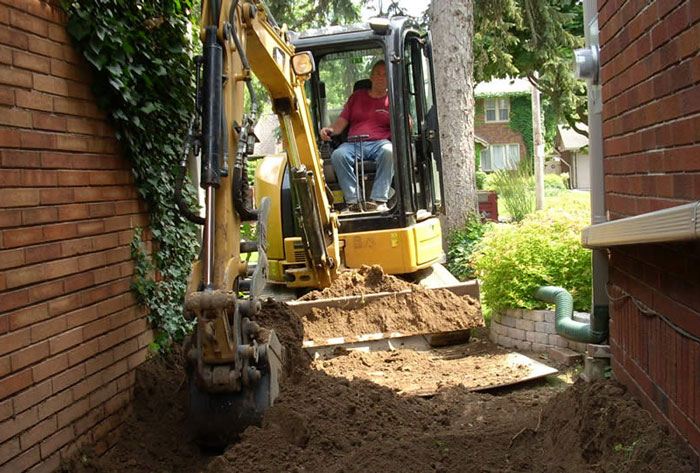
Clay smears easily. Once you glaze the trench wall with a bucket or shovel, you reduce inflow. I like to use a narrow bucket and dig in shallow passes, then trim the sides with a square shovel. Lay fabric in as you go before traffic has a chance to crumble the walls. Keep the stone clean. I have a vivid memory of a job near Masonville where a well meaning helper dumped a third of a yard of soil into the stone pile. We had to toss that load or risk clogging the whole trench. It cost us an hour and avoided weeks of callbacks.
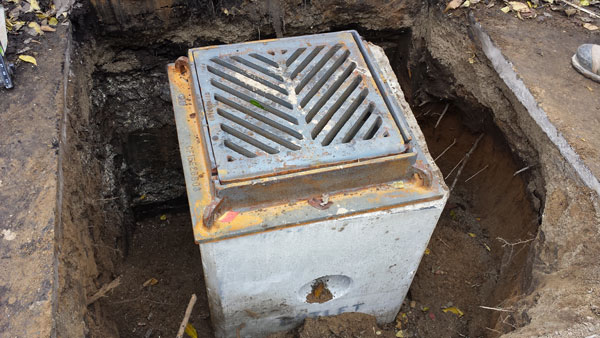
If the line is long, add a vertical cleanout riser at each end and after every long curve. Cap them flush with grade or just under sod. You rarely need to jet a well built French drain in clay, but if a child drops a toy car into a surface grate that connects to your line, you will be thankful for the access.
A quick pre dig checklist
- Call Ontario One Call and mark utilities. Photograph the marks.
- Stake the route and spray a grade line showing target invert and slope.
- Stage materials: non woven geotextile, 3/4 inch clear stone, 100 mm perforated pipe, solid pipe for outlets, fittings, animal guard, cleanout tees and risers.
- Plan spoil handling so clay does not contaminate your stone. Use tarps or separate bins.
- Confirm outlet location, discharge permissions, and frost considerations.
What it costs and why
Prices vary with access, length, and disposal. In London, for a straightforward yard French drain with a gravity outlet, homeowners can expect a range from roughly 60 to 120 dollars per linear foot, all in. Tight side yards with hand digging and wheelbarrow haul out push the number up. Simple straight runs with machine access land near the lower end. Tying a French drain into a sump and running a dedicated discharge line to the front can add a few thousand dollars depending on the route and restoration. When you invite drainage contractors London Ontario to bid, ask them to break out excavation, materials, disposal, and restoration. You will see where the money goes and can make smarter trade offs.
Do it yourself or hire it out
I have seen sharp homeowners do tidy work on shorter lines. If you have the patience to keep your stone clean and the eye to hold grade, it is a doable project. Think through spoil management before you cut the first sod. Clay spreads fast. Protect patios and walkways with plywood or tarps, and stage the stone where a skid or wheelbarrow path stays short.
When the job is complex, or when it touches the foundation, call in a pro. Look for someone who works in London clay regularly and will put their grade stakes where you can see them. The better companies do not just sell French drains. They look at grading, downspouts, and sideyard swales too. If someone is only pushing a single solution, they may not be solving the right problem.
Mistakes I see and how to avoid them
- Relying on pipe socks in clay. They clog and turn the pipe into a sealed tube.
- Skipping fabric or using landscape cloth. You need a non woven geotextile rated for filtration.
- Running perfectly flat. Set at least 1 percent fall on the pipe, more if you can.
- Daylighting below a lawn low point. The outlet ends up underwater right when you need it most.
- Backfilling the top 150 mm with the same heavy clay you just dug out. Use loam so the surface can breathe and drain.
Tying drains into downspouts and surface inlets
A French drain does not need to run alone. I often intercept downspouts with solid pipe and then switch to perforated within a gravel trench where the line crosses a wet zone. That way, during a storm, you get positive conveyance for roof water and still bleed off subsurface water along the route. Where a yard collects a lot of overland flow, place a yard basin with a grate at the low point and tie its outlet into the French drain. The basin catches leaves and debris. The French drain around it keeps the ground from turning to soup.
One note about downspouts in winter. Ice dams form at freeze thaw edges. Keep the solid sections pitched and minimize dips. A 100 mm line with two 45 degree bends is much less prone to icing than a line with a single sharp 90.
Soil restoration and sod survival
Clay compaction is a silent killer. After you backfill and wrap the fabric, add loamy topsoil and resist the urge to stomp it flat. Light tamping is fine. Water the area to help settle, then top up after a week if needed. If you are relaying sod, set it snug but do not stretch it. In late summer installs, I like to core aerate a metre wide strip centered over the trench a month after the job. It keeps that band from telegraphing through the lawn as a bright green or dull yellow stripe, both of which can happen if the soil profile above the trench differs too much from the adjacent soil.
A local example, from mush to firm
A family in Oakridge called after two springs of sloppy lawn along the north fence. The neighbour’s lot sat 400 mm higher, and snow melt from their shaded yard oozed across the line for weeks. We shot grades and set a 24 m French drain 1.5 m in from the fence, 400 mm deep to the pipe center, sloped at 1.25 percent to the front. We used non woven fabric, 3/4 inch clear stone to 100 mm below grade, then loam on top. We tied the outlet into a front yard daylight with an animal guard just behind the sidewalk. The homeowner sent me a photo after a 35 mm June storm. The strip along the fence that used to squish held firm. The sump in the basement cycled less often too, which is the side benefit many people notice once you start moving water away efficiently.
How french drains London Ontario searches intersect with real choices
When people search french drains London Ontario, they tend to land on generic advice from warmer, sandier places. Adjust those details for our soil and frost, and they start to fit. The same holds for weeping tiles London Ontario queries. Foundation drains here face clay backfill, a high spring water table in pockets near creeks, and chilly winters. Your plan should reflect that. When you are weighing bids from drainage contractors London Ontario, listen for language about fabric type, stone size, slope, frost, and outlets. If those topics do not come up without prompting, keep looking.
Maintenance, minimal but real
A good French drain in clay does not demand much. Walk the line after big storms. Keep outlets clear, trim grass away from splash aprons, and eyeball the cleanout caps if you have them. If a surface grate ties into your line, pop it and scoop leaves and maple keys every few weeks in spring. Every few years, flush the cleanouts with a garden hose, not a pressure washer. You want to move light silt, not blast the fabric.
Watch for settlement along the trench. It can drop a bit as stone and soil find their places. Top up with loam, not clay, and reseed.
Bringing it all together
French drains, done right for London’s clay, are quiet problem solvers. Set the slope, use the right fabric and stone, route to a legal outlet, and expect them to go dormant in deep winter. Tie them into broader backyard drainage strategies, not as a one size fits all fix but as a component that turns a stubbornly wet yard into one that just works. When the spring thaw hits and the Thames is running high, you will be glad the water under your lawn knows where to go.
Ashworth Drainage — Business Info (NAP)
Name: Ashworth DrainageAddress: 514 Hale St, London, ON N5W 1G8
Phone: (519) 660-9375
Website: https://www.ashworthdrainage.ca/
Email: [email protected]
Hours:
Monday: 9:00 AM – 5:00 PM
Tuesday: 9:00 AM – 5:00 PM
Wednesday: 9:00 AM – 5:00 PM
Thursday: 9:00 AM – 5:00 PM
Friday: 9:00 AM – 5:00 PM
Saturday: Closed
Sunday: Closed
Open-location code (Plus Code): XRR3+HV London, Ontario
Map/listing URL: https://maps.app.goo.gl/9kaoXAxRtJRP1ThS9
Embed iframe:
Socials (canonical https URLs):
Facebook: https://www.facebook.com/ashworthdrainage/
X: https://twitter.com/ashworthrules
Instagram: https://www.instagram.com/ashworthdrainage/
https://www.ashworthdrainage.ca/
Ashworth Drainage provides basement waterproofing and foundation repair services in London, Ontario and surrounding areas in Southwestern Ontario.
The company helps homeowners address wet basements, water intrusion, and drainage issues with solutions that fit the property’s conditions.
Service requests can include foundation repair, waterproofing options, sump pump and drainage-related work, and related assessments.
Ashworth Drainage is based at 514 Hale St, London, ON N5W 1G8.
To reach the team, call (519) 660-9375 or email [email protected].
Business hours are Monday to Friday 9:00 AM–5:00 PM, with the office closed Saturday and Sunday.
For directions and listing details, use the map listing: https://maps.app.goo.gl/9kaoXAxRtJRP1ThS9.
Popular Questions About Ashworth Drainage
What does basement waterproofing help prevent?Basement waterproofing is intended to reduce water intrusion and moisture problems that can lead to dampness, leaks, odors, and damage over time.
How do I know if I may need foundation repair?
Common signs can include visible cracks, water seepage, shifting or uneven areas, or recurring moisture problems; an on-site assessment is usually the best way to confirm causes and options.
What areas does Ashworth Drainage serve?
Ashworth Drainage serves London, Ontario and surrounding areas in Southwestern Ontario.
What are Ashworth Drainage’s hours?
Monday–Friday 9:00 AM–5:00 PM; Saturday closed; Sunday closed.
How can I contact Ashworth Drainage?
Phone: +1-519-660-9375
Email: [email protected]
Website: https://www.ashworthdrainage.ca/
Map: https://maps.app.goo.gl/9kaoXAxRtJRP1ThS9
Facebook: https://www.facebook.com/ashworthdrainage/
X: https://twitter.com/ashworthrules
Instagram: https://www.instagram.com/ashworthdrainage/
Landmarks Near London, ON
1) Kiwanis Park2) Western Fair District
3) Covent Garden Market
4) Victoria Park
5) Budweiser Gardens
6) Museum London
7) Fanshawe Conservation Area